

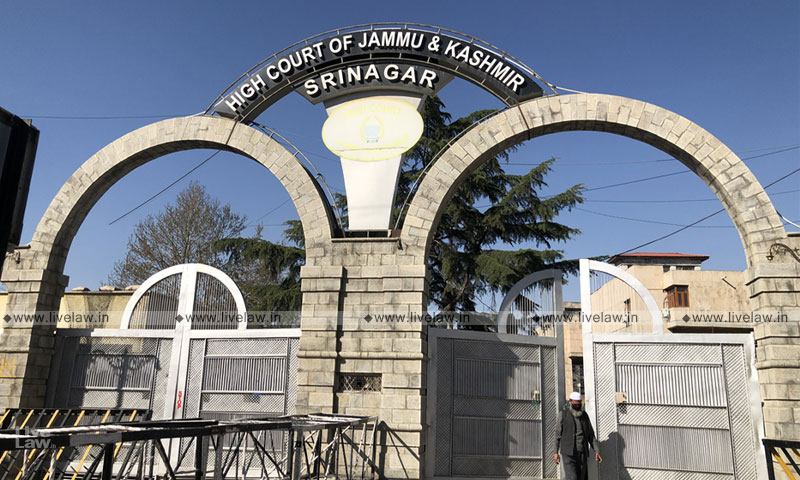
Srinagar, June 17: The High Court of Jammu & Kashmir and Ladakh has observed that the disability of a victim cannot be used as a reason to avoid recording his statement or conducting his examination during the course of an investigation.
While hearing a petition seeking cancellation of bail in a case registered under the Protection of Children from Sexual Offences (POCSO) Act at Tral, Justice Sanjay Parihar held that investigating agencies are under a legal obligation to ensure that differently-abled victims are examined with the help of interpreters or any other legally permissible assistance.
The Court noted that merely because the alleged victim was deaf and dumb, the investigating agency could not dispense with the requirement of recording his statement. It emphasized that various legal safeguards and mechanisms exist to facilitate communication with persons having disabilities and such provisions must be effectively utilized during investigation and trial.
Justice Parihar observed that the victim’s disability should not be treated as an impediment in collecting vital evidence. The Court stressed that authorities are duty-bound to make all necessary arrangements to ensure that the testimony of differently-abled victims is properly recorded and considered in judicial proceedings.
During the hearing, the Court found that the alleged victim had neither been cited nor examined as a witness in the case, despite the availability of legal procedures for recording the evidence of persons with disabilities.
Consequently, the High Court declined to interfere with the order granting bail to the accused and dismissed the plea filed by the Union Territory seeking cancellation of bail.
The judgment underscores the importance of ensuring equal access to justice for differently-abled victims and reiterates the responsibility of investigating agencies to adopt all available measures for obtaining crucial evidence in criminal cases.(KNC)