
Srinagar, Aug 6: Chief Secretary Atal Dulloo on Wednesday inaugurated the two-day IFAD Project Partners’ Learning Forum 2026 at the Sher-i-Kashmir International Conference Centre (SKICC), Srinagar, calling for stronger collaboration, technological innovation and women-led transformation to build a resilient, sustainable and market-oriented agriculture sector in Jammu & Kashmir.
Organised by the Mission Directorate of the Jammu & Kashmir Competitiveness Improvement Project (JKCIP) under the Holistic Agriculture Development Programme (HADP), the forum is being held under the theme “Celebrating the International Year of Women Farmers: Empowering Women, Transforming Agriculture.”
The event brought together senior government officials, representatives of the International Fund for Agricultural Development (IFAD), Project Directors of IFAD-supported projects from across the country, development experts, Farmer Producer Organisations (FPOs), entrepreneurs and stakeholders to deliberate on innovative strategies for inclusive and sustainable agricultural development.
Addressing the inaugural session, Chief Secretary Atal Dulloo highlighted the transformative role of technology, innovation and institutional convergence in strengthening the agriculture sector. He stressed the need for closer coordination among government departments, development partners and farming communities to create resilient, productive and market-driven agricultural systems.
Emphasising the pivotal role of women in rural development, Dulloo described women farmers as key drivers of socio-economic transformation and reaffirmed the government’s commitment to empowering them through technology adoption, entrepreneurship, capacity building and skill development.
Vice Chancellor of SKUAST-Kashmir, Prof. Nazir Ahmad Ganie, also addressed the gathering and underscored the importance of scientific research, innovation and modern technologies in improving agricultural productivity and sustainability. He called for stronger collaboration between research institutions, extension agencies and farmers to accelerate technology transfer and improve rural livelihoods.
Earlier, Dr. Sagar D. Dattatray, Mission Director, HADP/JKCIP, outlined the objectives of the Learning Forum and highlighted the achievements of JKCIP in promoting digital agriculture, strengthening Farmer Producer Organisations, supporting agri-startups, enhancing institutional systems and generating sustainable livelihood opportunities across Jammu & Kashmir.
James Marc de Sousa-Shields, Country Director, IFAD India, reaffirmed IFAD’s commitment towards supporting inclusive rural transformation through partnerships, innovation and knowledge sharing. He appreciated JKCIP’s progress in building a robust digital ecosystem and community-driven implementation model.
A major highlight of the inaugural session was the launch of three significant knowledge and digital initiatives under JKCIP. Chief Secretary Atal Dulloo and other dignitaries released the fourth edition of JKCIP Pulse, the project’s quarterly knowledge newsletter documenting field innovations and institutional learning, besides unveiling the JKCIP Annual Report 2025–26, showcasing the project’s achievements during its first full year of implementation.
The event also witnessed the launch of Krishi Mitra AI, an in-house developed Artificial Intelligence-powered Crop Advisory and Leaf Diagnosis Platform designed to provide personalised, intelligent and data-driven advisory services to farmers through the JKCIP Digital Ecosystem.
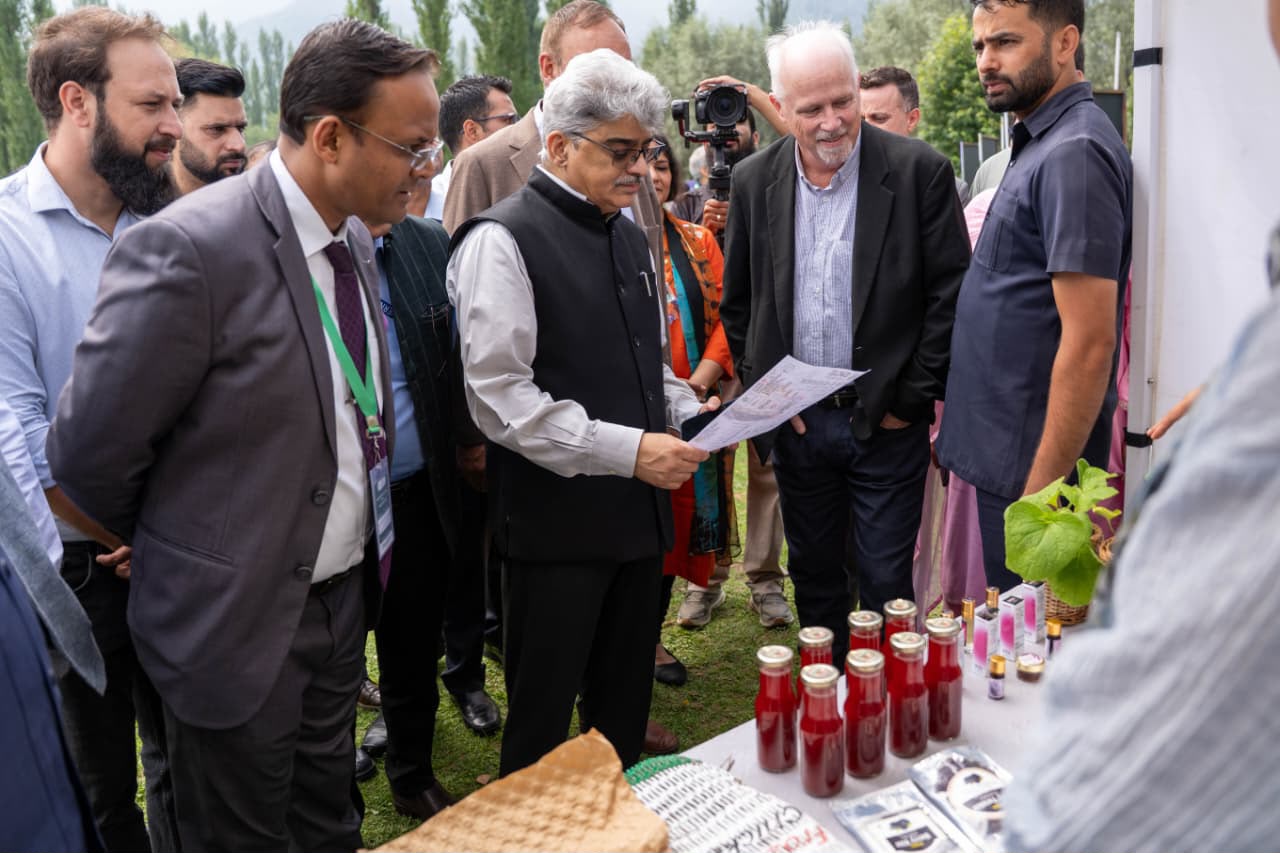
The forum featured an exhibition showcasing agricultural innovation and entrepreneurship, where ten JKCIP-supported agri-startups displayed technologies and solutions related to precision farming, agri-processing, digital agriculture and value addition. Five Farmer Producer Organisations also exhibited a range of high-value agricultural and horticultural products, reflecting the growing success of collective farming enterprises in Jammu & Kashmir.
The Departments of Agriculture Kashmir, Horticulture Kashmir and Horticulture Planning & Marketing (HPM) also established thematic exhibition stalls highlighting flagship programmes, farmer-centric initiatives and value chain development efforts across the Union Territory.
The inaugural day concluded with technical sessions, networking opportunities and knowledge-sharing among project leaders from various IFAD-supported projects across India, setting the stage for deeper collaboration during the remaining sessions.
According to the organisers, the second day of the Learning Forum will include thematic discussions, experience-sharing sessions by IFAD-assisted projects from different states and field visits to successful Farmer Producer Organisations, agri-startups and Centres of Excellence established under JKCIP. (KNC)